Most case studies are written about somebody else's project by somebody who was not there. This one is the opposite. The work described below is my own, carried out as research and development officer at Farmworks Africa in Kenya between February 2021 and July 2022. It is written here in the structure a company would commission for a customer story, because the format is the point of the sample and the project is the material I can report honestly.
How to read this case study
Three things are worth knowing before the numbers appear.
- The trial findings are qualitative directional results from project records, not a peer reviewed publication. Absolute yields are not reported here because the underlying dataset is not mine to publish.
- The programme outcome quoted later is a figure from project reporting across an advisory network, not a controlled measurement, and it reflects a package of guidance rather than the cover crop alone.
- Where I am unsure, the text says so. That is the whole reason a company hires a research writer for this rather than a copywriter.
The situation
Farmworks Africa ran an out-grower network of roughly 1,700 smallholder farmers. The commercial relationship was straightforward. The farmers grew, the company bought, and the quality and volume of what arrived depended on how those farms were managed. Agronomic advice was therefore not a service the business offered on the side. It was the input that determined the supply.
The binding constraint on those farms was fertiliser. Nitrogen is the largest cash input in most smallholder maize systems and it has to be bought before the harvest that pays for it. Across sub-Saharan Africa average fertiliser use was running at around 34.5 kilograms per hectare in 2022, against a continental policy target of 50 set back in 2006.1 Advice built on applying more nitrogen runs directly into a cash constraint, and advice that a farm cannot finance is not advice.
The question that had to be answered
Legume cover crops fix atmospheric nitrogen and leave some of it behind for the crop that follows. That is well established in principle. What was not established for this network was anything a field officer could act on. Which legume. At what fertiliser rate. On which soil. And by enough of a margin to justify asking a household to give up a season of land to a crop it would not sell.
Advice that a farm cannot finance is not advice. The useful question was never whether cover crops work. It was whether they work where the fertiliser budget is zero.
How the trial was built
A two by three factorial design, run across two contrasting soil types.
The two cover crops were lablab (Lablab purpureus) and mucuna (Mucuna pruriens), both already familiar in the region. The nitrogen rates were zero, 50 and 100 kilograms per hectare, deliberately spanning from nothing at all to roughly three times what the average farm in the region actually applies. Maize was the primary crop, with capsicum, eggplant and tomato also under test. I supervised a team of five through establishment, data collection and analysis, standardised the protocols so results from different sites could be compared, and scored pest, disease and weed incidence at every monitoring round rather than only at harvest.
The zero-nitrogen arm is the design decision that mattered most, and it is the one most often left out. A trial that starts at the recommended rate can only tell you how to improve on a practice the poorest farms are not following.
What the data showed
Crops following mucuna consistently out-yielded crops following lablab, and they did so across all three nitrogen rates. That much was a clean result.
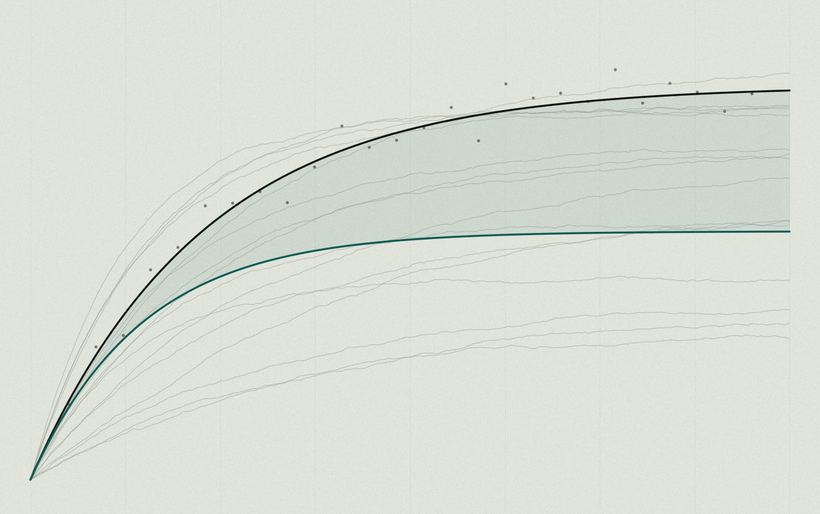
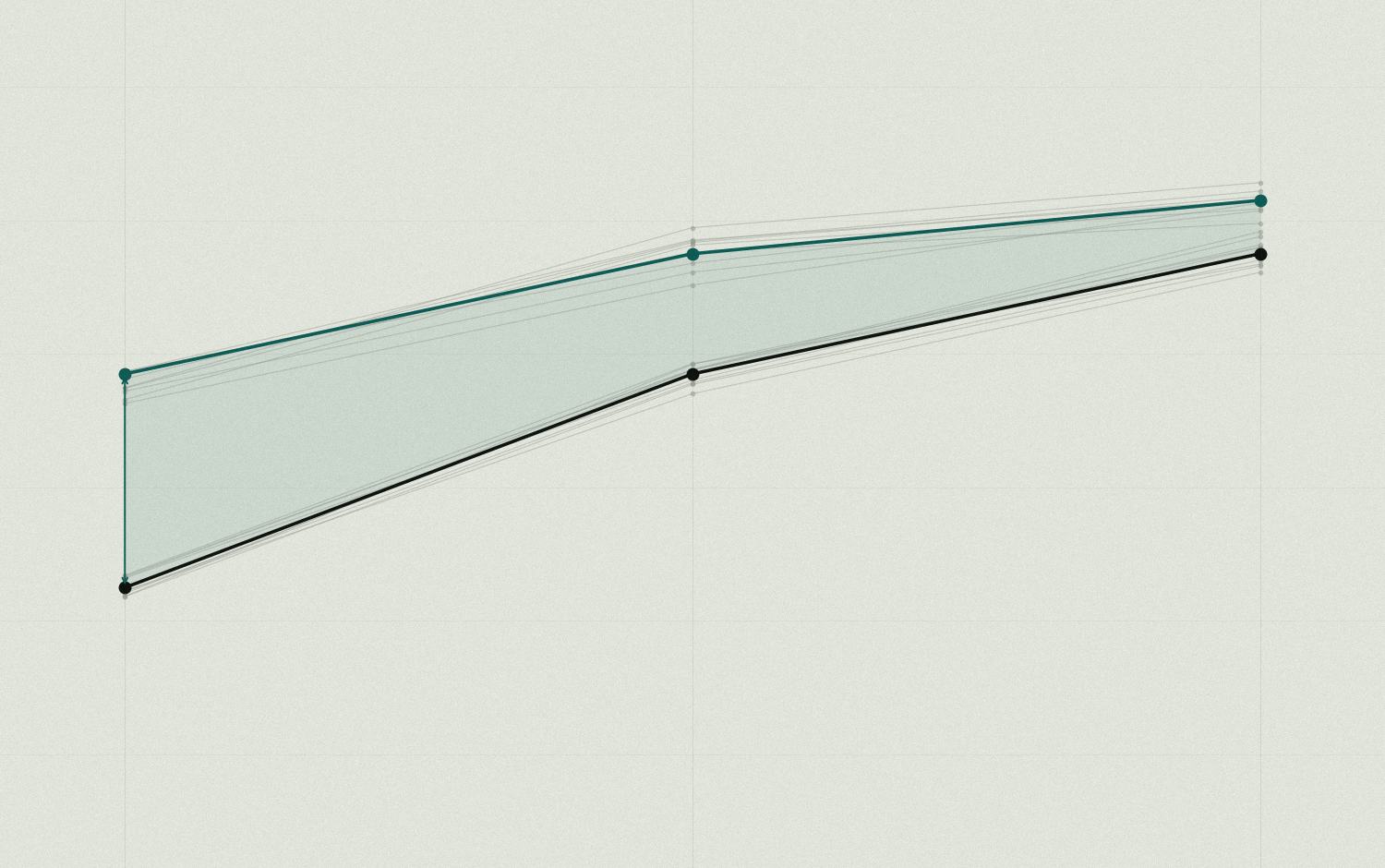
The more interesting part was where the margin sat. The advantage of mucuna over lablab was largest at zero applied nitrogen and narrowed as the rate rose. By the top of the range the two cover crops were close to each other. Bought nitrogen, in other words, substituted for the difference between them.
Why that is the useful half of the result
Read casually, a converging result looks like a weak one. Read properly, it is the finding with the most commercial value in the whole trial, because of who sits at each end of the range.
At 100 kilograms per hectare, the choice of cover crop barely matters. Those are farms with cash, and they have already solved the nitrogen problem by buying it. At zero, the choice of cover crop matters most. Those are the farms with no fertiliser budget at all, which in this network was a substantial share of it.
So the recommendation that came out of the trial was not "use mucuna". It was that the recommendation is worth the most to the growers with the least, which is the inverse of how most input advice behaves. For a business whose supply depends on the weakest farms in its network performing better, that is the sentence the whole eighteen months was for.
What happened on the farms
The findings were translated into field guidance and delivered through the out-grower network of around 1,700 farmers, alongside capacity-building sessions on crop and nutrient management. Project reporting recorded yield increases of roughly 25 percent among participating growers.
Reading that figure honestly
That 25 percent is a programme-level figure from project records, not a controlled comparison. It covers a package of guidance, of which the cover crop finding was one part, and it has no counterfactual attached. It is reported here as what the project recorded, which is the most it can support. A case study that presented it as the measured effect of a single intervention would be making a claim the data cannot carry, and any technical reader would know it.
What transfers to other programmes
Three things generalise beyond this network, whether you are running an advisory programme, building an agronomy product or writing about either.
- Test at zero, not only at the recommended rate. The effect that matters for resource-constrained users frequently lives at the bottom of the input range, and a trial designed around the recommendation will never see it.
- Report where an effect is largest, not only whether it exists. An interaction is not a complication to be averaged away. It is usually the part that tells you who the intervention is actually for.
- Keep trial results and programme outcomes in separate columns. Merging them produces a better-looking number and a claim that collapses the first time somebody technical reads it closely.
The last of those is the reason this piece exists in a writing portfolio. A case study is only worth commissioning if the person writing it can tell which of your numbers will survive scrutiny and which will not, and is willing to say so before it goes out rather than after.
Sources
- International Fertilizer Development Center (2024) Measuring fertilizer consumption progress in Africa. Source of the 34.5 kilograms per hectare figure for 2022.
- African Development Bank. The Abuja Declaration on Fertilizer for an African Green Revolution, 2006. Source of the 50 kilograms per hectare target.
- Trial design, results and programme outcomes are from my own project records at Farmworks Africa, Kenya, February 2021 to July 2022. Unpublished and not peer reviewed.