
Maize in East Africa has three enemies that most people outside farming have never heard of.
The first is a moth. Its caterpillars, called stemborers, tunnel inside the maize stalk where sprays struggle to reach them, and hollow the plant from the inside.
The second is a flower. Striga, often called witchweed, is small, purple and quietly devastating. It attaches to maize roots underground and drains the plant of water and nutrients before the weed has even broken the surface. In western Kenya, striga was estimated to infest around 76 percent of maize and sorghum land, costing farmers about 40.8 million US dollars a year.
The third arrived more recently. Fall armyworm was first reported in Africa in 2016 and spread quickly across the continent.
Most answers to pests cost money. Pesticides. Herbicides. New seed, bought again every season.
One of the most successful answers in Africa costs almost none of that. It is two plants, placed in exactly the right spots.
It was developed in Kenya by scientists at icipe, the International Centre of Insect Physiology and Ecology, working with Rothamsted Research in the UK. After five years working with farmers in Kenya and a year studying the evidence behind agricultural advice at The University of Edinburgh, I think it is one of the most elegant pieces of agricultural science on the continent. It also carries a lesson far bigger than pest control.
It is called push-pull.
The push
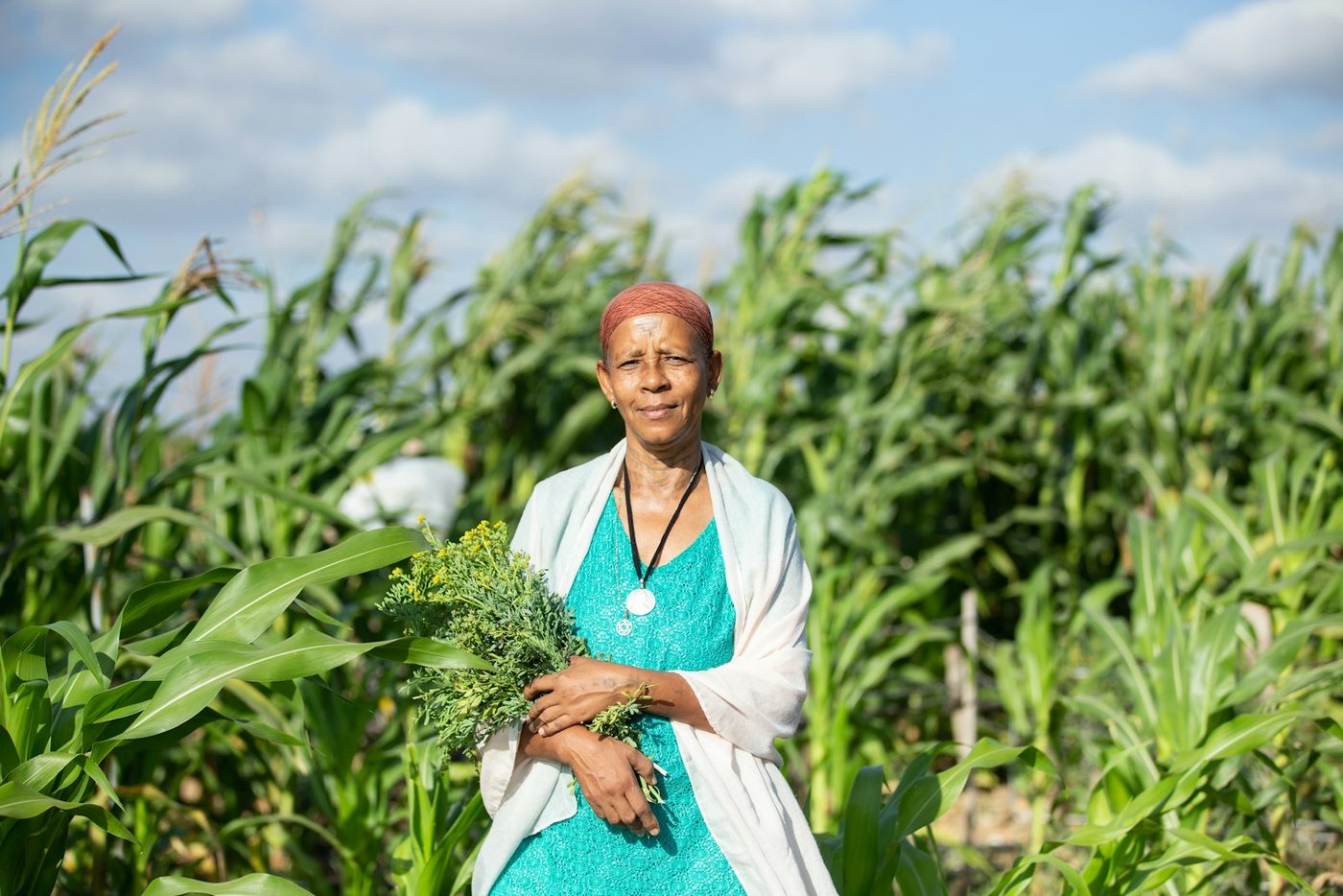
Between the rows of maize, farmers plant desmodium, a low-growing legume.
Desmodium releases chemicals into the air that stemborer moths find repellent. To a moth looking for somewhere to lay its eggs, the maize field simply smells like the wrong place to be. In some trials, intercrops like this cut stemborer populations by more than 80 percent.
Underground, desmodium does something even cleverer.
Its roots release compounds that trigger striga seeds to germinate, and then stop the young parasite from attaching to a host. Scientists call it suicidal germination. The weed wakes up, finds nothing it can use, and dies.
And because desmodium is a legume, it also covers and feeds the soil, and makes excellent feed for livestock.
The pull
Around the edge of the field, farmers plant a border of Napier grass.
To stemborer moths, Napier grass is irresistible. They are drawn to it and lay their eggs there instead of on the maize.
It is a trap.
When the young caterpillars hatch and bore into the grass, the plant produces a gummy substance that immobilises many of them. Only about 20 percent survive to adulthood.
The moths are pushed out of the maize and pulled into a dead end.
What happened on real farms
The results on farms were not modest.
In early adopters' fields, maize yields rose from around 1 tonne per hectare to about 3.5 tonnes. By the end of 2014, around 92,000 smallholder farmers had taken up push-pull across Ethiopia, Kenya, Uganda, Tanzania and Nigeria. Sixty percent of them were women.
Then fall armyworm arrived, a pest the system was never designed for.
Researchers had already built a climate-adapted version for drier areas, using a drought-tolerant greenleaf desmodium and a Brachiaria grass border. When they compared it with maize grown alone on 250 farms in western Kenya, eastern Uganda and northern Tanzania, the push-pull plots had 82.7 percent fewer fall armyworm larvae per plant, 86.7 percent less plant damage, and grain yields 2.7 times higher.
A system built to fool one moth turned out to protect maize against another.
Why it matters that so many adopters were women
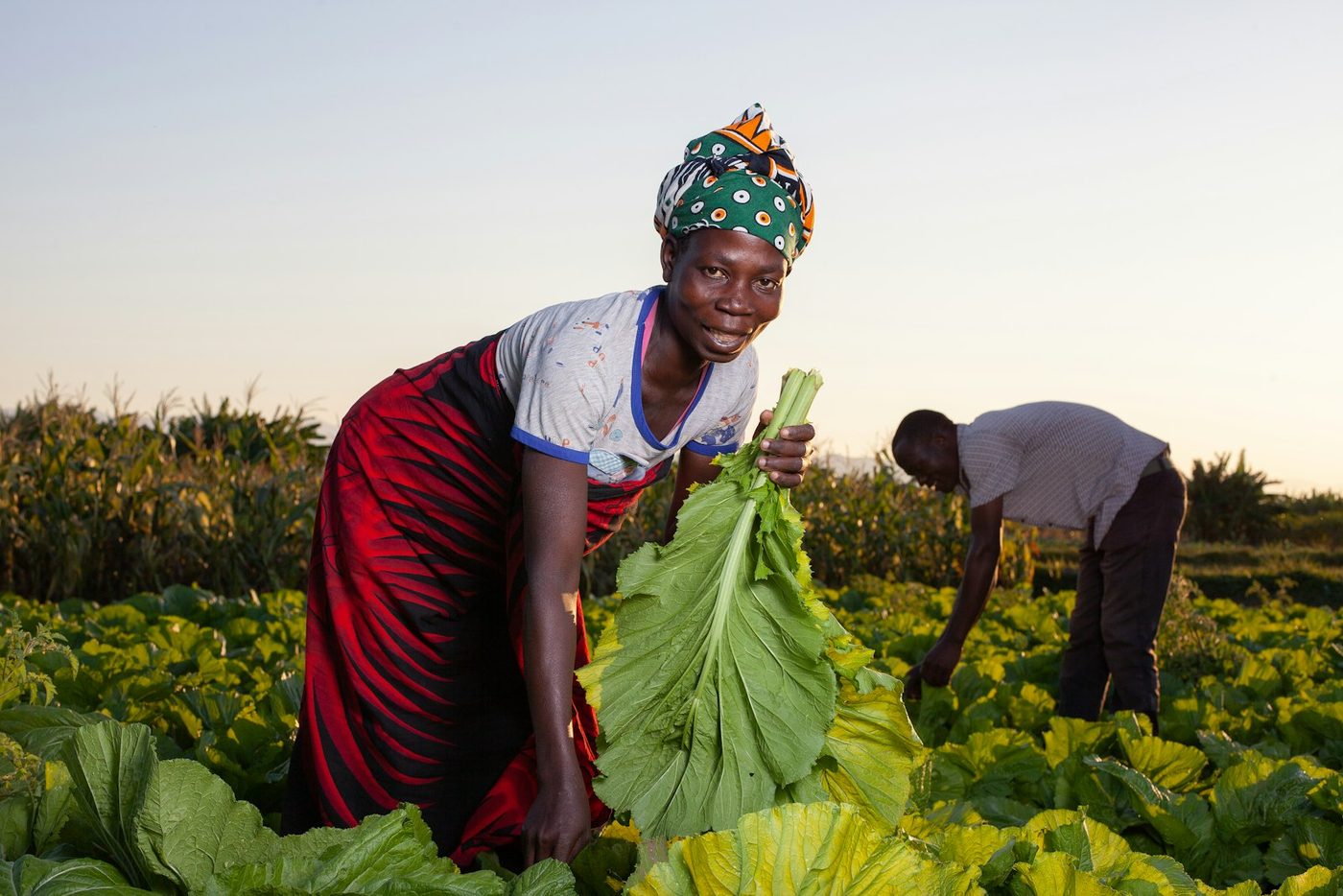
Six in ten adopters being women is not a footnote.
Part of the reason is likely in what push-pull produces besides maize. Desmodium and Napier grass are high-quality fodder, which supports dairy cows and brings in milk income alongside the grain. And the system does not ask a household to buy pesticide every season, which matters most to the farmers with the least cash.
A practice that raises yield, feeds livestock and does not depend on a shop is a practice that fits the realities many women farmers manage every day.
Why it has not spread everywhere
If push-pull works this well, why is it not on every maize farm in Africa?
icipe itself names one of the biggest barriers. Farmers need affordable access to desmodium seed, and building seed supply through community production and commercial partners is still a priority.
The other barrier, in my view, is that push-pull is knowledge-intensive. It is not a product you buy and apply. A farmer has to understand why the plants go where they go, and manage a field with three crops in it instead of one. That takes training, demonstration plots and time, the parts of agricultural development that are hardest to fund and easiest to cut.
The bigger lesson
Most agricultural advice asks one question. What should we add?
More fertiliser. A stronger spray. A new variety.
Push-pull asks a different question. How does this system already work, and how can we redesign the field around it?
That is what researchers call ecological intensification, producing more by making smarter use of the biology already on the farm. It is the difference between fighting a system and recruiting it.
Not every problem has a push-pull answer. But the next time someone tells you African agriculture needs more inputs, it is worth remembering that one of its biggest successes came from a grass, a legume and a very good understanding of how a moth decides where to lay its eggs.
Join the conversation
I would love to hear from anyone who has seen push-pull fields in person. What made them work, or not work, where you were?
This article was first published on LinkedIn on 24 September 2026. Read the original and the discussion there.
Sources
- Khan, Z.R., Midega, C.A.O., Bruce, T.J.A., Hooper, A.M. and Pickett, J.A. (2010) Exploiting phytochemicals for developing a push-pull crop protection strategy for cereal farmers in Africa. Journal of Experimental Botany, 61(15), 4185 to 4196.
- Midega, C.A.O., Pittchar, J.O., Pickett, J.A., Hailu, G.W. and Khan, Z.R. (2018) A climate-adapted push-pull system effectively controls fall armyworm in maize in East Africa. Crop Protection, 105, 10 to 15.
- icipe, International Centre of Insect Physiology and Ecology. Push-pull technology, impact summary.
- Goergen, G., Kumar, P.L., Sankung, S.B., Togola, A. and Tamò, M. (2016) First report of outbreaks of the fall armyworm in West and Central Africa. PLOS ONE, 11(10).
- Tittonell, P. and Giller, K.E. (2013) When yield gaps are poverty traps. The paradigm of ecological intensification in African smallholder agriculture. Field Crops Research, 143, 76 to 90.